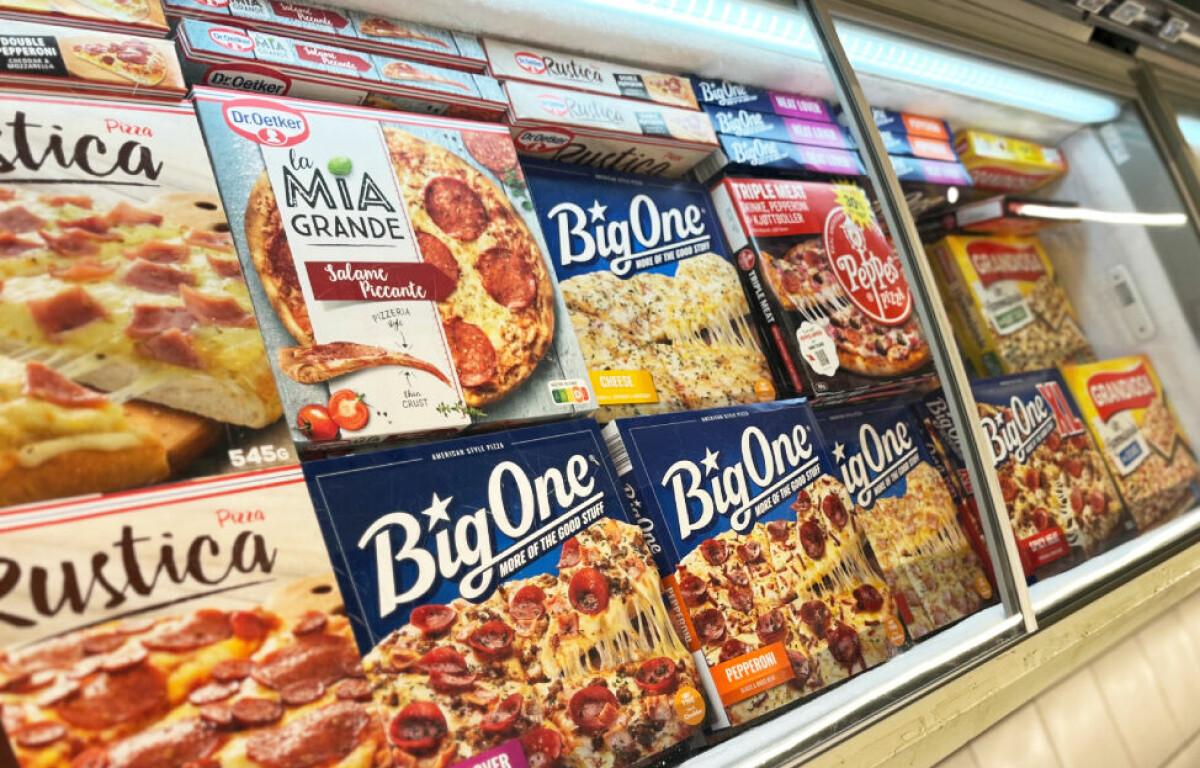
Ready meal packaging has to do more than make a product look appealing on a supermarket shelf. It needs to work with the food container, fit the packing process, carry the required product information, and suit the way the finished meal is sold.
For many food manufacturers, the choice comes down to two paperboard formats: a paperboard sleeve or a folding carton.
Both can provide printed branding and a professional retail appearance, but they serve different purposes. A sleeve wraps around an existing tray or container, while a folding carton creates a more complete outer enclosure. Choosing between them affects material usage, packaging operations, product presentation, and the overall retail pack design.
There is no universal winner. The right format depends on how the ready meal is packed, what the retailer expects, how much of the product should remain visible, and what role the outer paperboard component needs to perform.
This guide compares the two formats from a practical purchasing and packaging development perspective.
1. What Is a Paperboard Sleeve for Ready Meals?
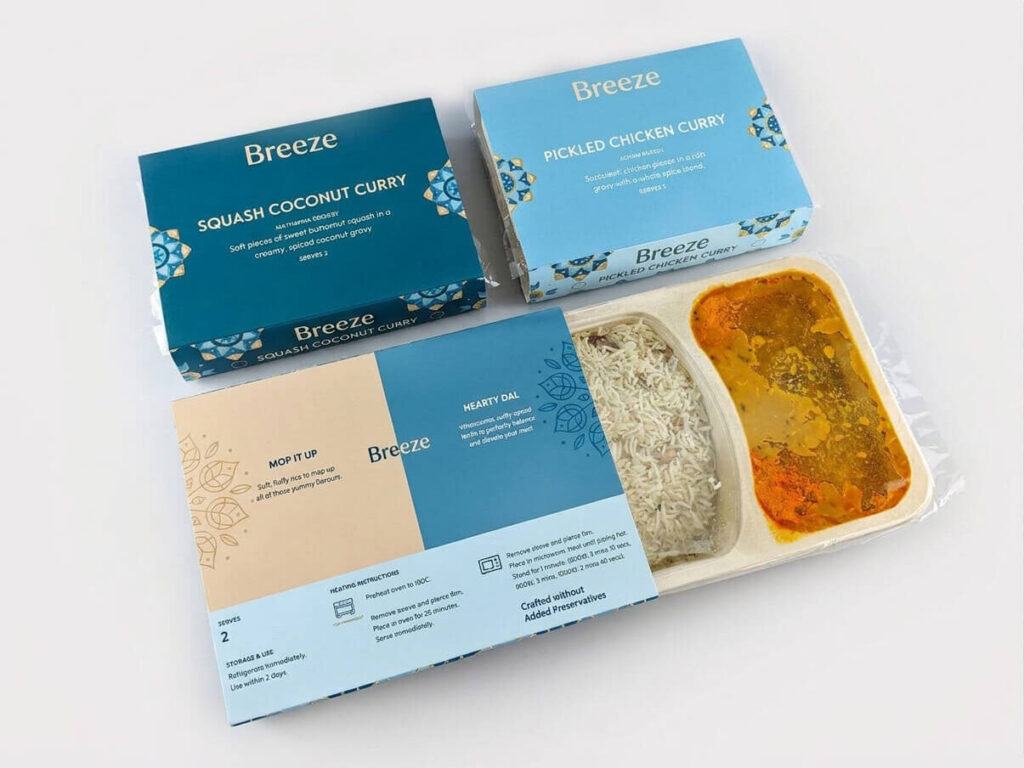
A paperboard sleeve is a printed paperboard wrap that fits around an existing food tray, bowl, or sealed container. It normally leaves some sections of the primary package exposed rather than enclosing the product completely.
For ready meals, sleeves are commonly used with chilled meal trays, frozen food trays, and prepared dishes sold in supermarkets.
The food is held inside the primary container, which is typically sealed with film, a lid, or another suitable closure. The sleeve provides the external branding and product information.
A typical tray-and-sleeve pack consists of:
- A food tray or bowl containing the meal
- A sealed film lid or separate container closure
- A printed paperboard sleeve fitted around the tray
- Product information and retail graphics printed on the sleeve
The sleeve can carry the product name, brand identity, meal photography, preparation instructions, nutritional information, barcode, and other required details.
Its main purpose is to enhance the retail presentation and provide a convenient printed surface without creating a fully enclosed outer box.

Common Ready Meal Applications
Paperboard sleeves are particularly suitable for:
- Chilled pasta and noodle meals
- Microwave meal trays
- Frozen prepared meals
- Rice and curry dishes
- Single-serving meal trays
- Multi-compartment ready meal containers
For products already packed in a stable tray, a sleeve can provide a clean retail appearance while allowing part of the container to remain visible.
2. What Is a Folding Carton for Ready Meal Packaging?
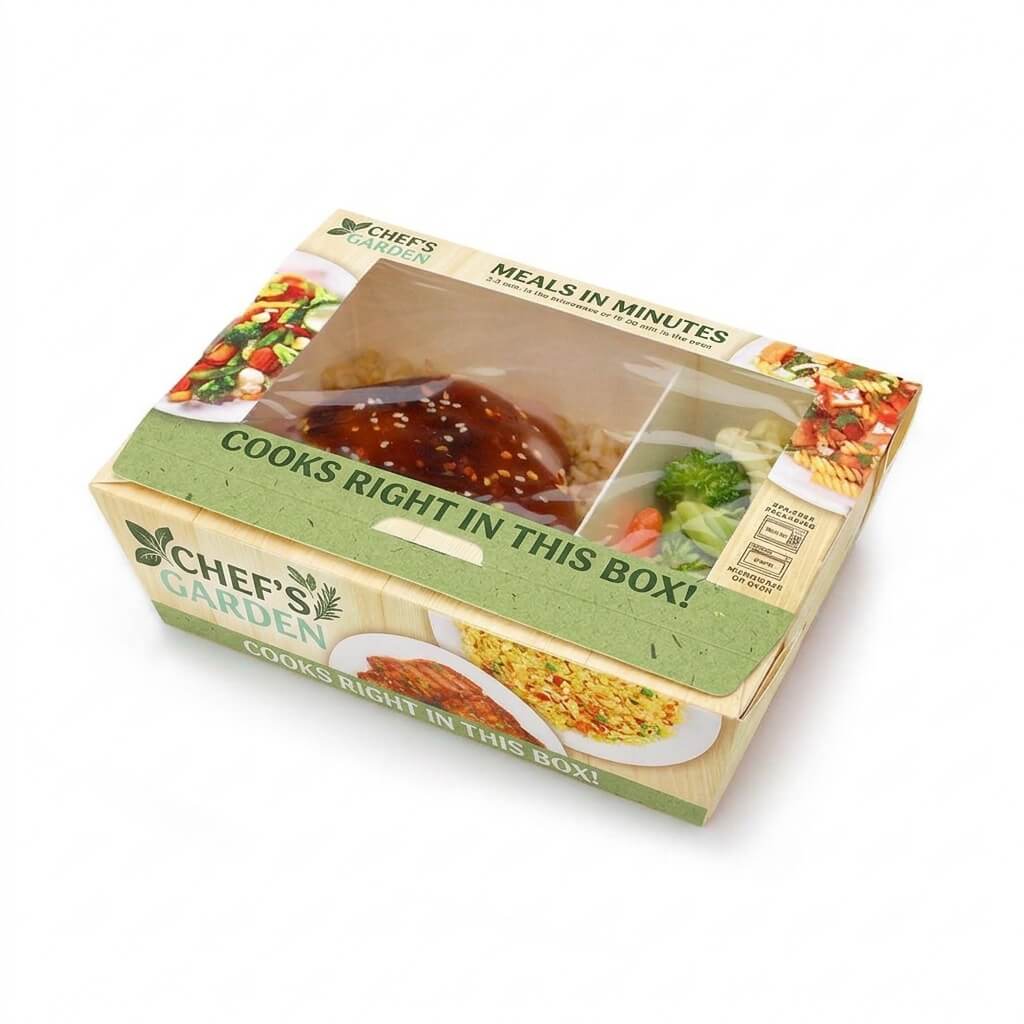
A folding carton is a paperboard box manufactured from a printed and die-cut flat blank. It is folded and assembled into a three-dimensional structure, usually with tuck-in flaps, glued seams, or other closing features.
Unlike a sleeve, a folding carton can enclose the product or its primary container on multiple sides.
For ready meals, folding cartons are often used as an outer retail package around an inner tray, sealed bowl, or other food container.
Common applications include:
- Frozen meal cartons
- Retail pasta meal boxes
- Prepared rice meal cartons
- Multi-component meal packaging
- Meal kits with several individually packed ingredients
- Ready meal products requiring a more complete outer presentation
A folding carton provides more enclosed panel space for printed graphics and product information. It can also create a more defined retail package, especially when the product contains several components.
However, a paperboard folding carton should not automatically be considered the food-contact or sealing component. Where an inner tray or sealed container is used, that component remains responsible for containing the food.

3. Paperboard Sleeves vs. Folding Cartons: Key Differences
The most important difference is how each format interacts with the existing food container.
A sleeve works around a container. A folding carton creates a more complete outer package around the product or its inner packaging.
The comparison below highlights the factors that matter most when selecting a format for ready meal production.
| Comparison Factor | Paperboard Sleeve | Folding Carton |
|---|---|---|
| Package Coverage | Partial coverage | More complete enclosure |
| Material Usage | Generally lower | Generally higher |
| Product Visibility | More of the tray or container can remain visible | Inner container is usually less visible |
| Printed Surface | Limited by sleeve dimensions | More enclosed printable panels |
| Product Containment | Depends on the inner container | Depends on the carton design and inner packaging |
| Retail Presentation | Modern, minimal appearance | More traditional boxed presentation |
| Packing Process | Requires sleeve application around the container | Requires carton forming, loading and closing |
| Storage | Flat blanks or pre-glued sleeves | Flat carton blanks |
| Typical Application | Single meal trays and bowls | Individual retail cartons and multi-component packs |
These differences are not absolute. Sleeve dimensions, carton structure, tray shape, printing coverage, and production methods can all be customized.
The following sections explain when each format makes more commercial sense.
4. When Should Food Manufacturers Choose Paperboard Sleeves?
A paperboard sleeve is often the better option when the primary food container already performs the main packaging functions and only needs an attractive outer presentation.
When the Meal Is Already Packed in a Sealed Tray
If a ready meal is filled into a tray and sealed before the paperboard component is applied, a separate outer box may not be necessary.
The sleeve adds the printed retail information without duplicating the coverage already provided by the tray and its lid.
This is particularly relevant for chilled and frozen single-serving meals sold in supermarket refrigerated or freezer sections.
When Product Visibility Matters
Some food brands want customers to see the shape or layout of the meal container before purchasing.
A sleeve can leave the tray edges, transparent lid, or other sections of the primary package visible, depending on the design.
This can be useful for meals with distinct compartments, recognizable ingredients, or an attractive presentation.
When a Compact Outer Pack Is Preferred
A sleeve generally uses less paperboard than a fully enclosed carton of comparable dimensions.
For brands producing large volumes of single-serving meals, reducing unnecessary outer packaging can be a useful part of packaging optimization.
However, actual savings depend on the sleeve dimensions, board specification, production yield, printing requirements, and application method.
When the Existing Packaging Line Supports Sleeving
Some ready meal production lines are designed to apply pre-glued sleeves or form sleeves around filled trays.
If the existing equipment supports this process, using a sleeve may avoid introducing a completely different carton-forming and loading operation.
The equipment and finished tray format must still be checked before selecting the design.

5. When Are Folding Cartons a Better Choice?
A folding carton is often more suitable when the product requires greater outer coverage, a defined box structure, or additional space for branding and product information.
When the Product Needs a More Complete Outer Package
Some ready meal products are sold with an inner tray or container that benefits from a separate paperboard enclosure.
A folding carton can surround more of the inner package and provide a consistent exterior appearance.
This is useful for brands that want a conventional retail box rather than a partially exposed tray-and-sleeve format.
When There Are Multiple Components
Not every ready meal consists of one tray.
Some meal products contain separate sauce portions, seasoning sachets, side dishes, or individually packed ingredients.
A folding carton can be designed around an organized inner pack, subject to suitable internal support or inserts where required.
This makes it a practical option for selected meal kits and multi-component retail products.
When More Space Is Needed for Product Information
A folding carton typically offers more external panels than a simple sleeve.
This can be valuable when a product range requires:
- Detailed preparation instructions
- Multiple languages
- Nutritional and ingredient information
- Branding and product photography
- Barcodes and retailer information
- Promotional or product-range messaging
The available space still needs to be planned around the finished carton dimensions and the information required for the target market.
When a Defined Box Shape Is Part of the Brand Presentation
For some ready meal brands, the packaging itself is an important part of the product’s retail identity.
A folding carton creates a more structured package with recognizable front, back, side, top, and bottom panels.
It can also accommodate different opening and closing styles depending on the product and packaging requirements.

6. How the Two Formats Affect Packaging Line Operations
A packaging format should not be selected based on its appearance alone. It also needs to fit the way the food manufacturer operates.
Sleeves and folding cartons involve different handling steps, equipment requirements, and changeover considerations.
Sleeve Application
Depending on the equipment, sleeves may be supplied as pre-glued flat or formed pieces, or as flat blanks that are wrapped around the tray during production.
The operation generally involves:
- Feeding the ready meal tray into the sleeving section.
- Positioning the sleeve around the container.
- Forming or closing the sleeve according to its design.
- Checking the finished pack for alignment and appearance.
For this process, the sleeve needs to match the actual container dimensions.
Tray taper, flange width, lid projection, and filled height can all affect the finished fit.
A sleeve that fits an empty tray may not fit the same tray after filling and sealing if the finished pack dimensions change.
Folding Carton Assembly
Folding carton production and application involve a different sequence.
The carton blank may be supplied flat or pre-glued, depending on the design and packing arrangement.
The food manufacturer then forms the carton, places the inner package inside, and closes the structure.
A typical operation may involve:
- Feeding and erecting the carton.
- Opening the carton into its required shape.
- Loading the inner tray or food container.
- Closing the carton using the specified flap or closure system.
- Checking the finished pack.
The exact process depends on the carton structure and whether the product is packed manually, semi-automatically, or through an automated cartoning line.
What Should Buyers Confirm?
Before approving either format, buyers should discuss the following with their production and packaging teams:
- Is the packaging applied before or after the food container is sealed?
- Does the production line support sleeves, folding cartons, or both?
- Are packaging components supplied flat or pre-glued?
- Does the line require a specific blank feeding direction?
- How much space is available for the packaging equipment?
- How are product size changes handled?
- What level of manual handling is acceptable?
A packaging design that looks suitable in a sample may still create difficulties when introduced into a high-volume production line.


7. Cost Comparison: Sleeves vs. Folding Cartons
Paperboard sleeves are generally more material-efficient because they cover less of the product.
However, a sleeve is not automatically the cheaper option in every production environment.
The total packaging cost includes more than the paperboard used in the finished pack.
Important cost factors include:
Paperboard consumption
A sleeve usually requires less board than a fully enclosed carton. The difference depends on the sleeve coverage, carton dimensions, and structural design.
Printing and finishing
Both formats can use custom offset printing, coating, lamination where appropriate, and decorative finishes. The number of printed panels and finishing requirements will influence the final price.
Die-cutting and converting
The shape, cutting layout, folding requirements, gluing points, and production yield all affect manufacturing cost.
Packaging line compatibility
A format that requires additional equipment, manual application, or slower handling may increase the total cost of packaging operations.
Order quantity and SKU range
Multiple designs, different tray sizes, and frequent product changes can affect production planning and the cost per version.
For this reason, buyers should compare the total cost of the finished packaging system rather than comparing the paperboard price alone.
A useful quotation request should include the tray dimensions, proposed sleeve or carton structure, artwork requirements, order quantity per design, and packing method.
8. How Sleeves and Folding Cartons Support Different Retail Strategies
Packaging decisions are also influenced by how the product will be displayed and sold.
A chilled meal in a transparent tray has different retail presentation requirements from a boxed meal kit containing several components.
Supermarket Chilled and Frozen Sections
Sleeves work well when the tray itself is part of the product presentation.
The visible container can help customers understand the meal format, while the printed sleeve identifies the brand and product variety.
Folding cartons are more appropriate when the brand prefers a consistent boxed appearance across its product range.
Premium and Specialty Meal Ranges
For premium ready meals, a folding carton can offer a larger uninterrupted printed surface.
This gives the brand more room for food photography, product descriptions, and a consistent visual identity across different varieties.
Sleeves can also create a premium appearance through well-planned graphics and finishing. A larger box is not necessarily a more premium package.
Multi-Pack and Meal Kit Products
When several items are sold together, a folding carton may provide a more convenient way to organize the contents.
The structure can be designed around the number, size, and arrangement of the inner components.
A sleeve may still be suitable for grouped products when the primary containers are already stable and the outer wrap only needs to keep the retail unit visually consistent.
9. What Should Buyers Consider Before Ordering?
Once the preferred packaging format has been identified, the next step is to confirm the actual pack specifications.
A few practical checks can prevent unnecessary redesigns and sampling delays.
1. Confirm the finished product dimensions
Use the dimensions of the filled and sealed tray or container, not just the empty packaging component.
2. Define the required coverage
Decide which areas should remain visible and which areas need to be covered by the paperboard component.
3. Confirm the packaging line
Share the proposed format with the production team before finalizing the design.
4. Review the artwork layout
Check that product information, barcode placement, preparation instructions, and brand graphics fit the available panels.
5. Request a structural sample
A physical sample helps verify the sleeve fit or carton assembly before mass production.
6. Test the finished retail pack
Check the package after application and during normal handling. For automated production, confirm that the format runs reliably on the intended equipment.
10. Which Format Should You Choose?
The decision becomes much easier when the main packaging requirement is clearly defined.
| Your Packaging Requirement | Recommended Format |
|---|---|
| A sealed meal tray needs printed branding | Paperboard Sleeve |
| The product container should remain partly visible | Paperboard Sleeve |
| Lower outer paperboard coverage is preferred | Paperboard Sleeve |
| The product needs a more complete outer enclosure | Folding Carton |
| Several individually packed components are sold together | Folding Carton |
| More external panels are needed for product information | Folding Carton |
| The retail product is designed around a conventional box format | Folding Carton |
For many chilled and frozen ready meals, a sleeve is a practical choice when the primary tray already contains the product and the outer packaging mainly provides branding and retail information.
A folding carton is often the better fit when the product needs a more complete outer structure or when several components must be presented as one retail unit.
The best choice is the one that works with the actual product, packaging line, and retail requirements—not simply the format that uses less material.
Frequently Asked Questions
1. What is the main difference between a paperboard sleeve and a folding carton?
A paperboard sleeve wraps around an existing tray or container and leaves part of it exposed. A folding carton forms a more complete outer enclosure with multiple panels and closing sections.
2. Are paperboard sleeves suitable for frozen ready meals?
They can be suitable when used as secondary packaging around an appropriate frozen food tray or container. The finished packaging system should be evaluated under the intended storage, handling, and distribution conditions.
3. Are folding cartons better than sleeves for ready meals?
Not necessarily. Sleeves are often suitable for sealed single-serving trays, while folding cartons offer more complete coverage and greater flexibility for products with multiple components or larger information requirements.
4. Which format uses less paperboard?
A sleeve generally uses less paperboard because it covers a smaller portion of the inner container. Actual material consumption depends on the design, dimensions, board specification, and cutting layout.
5. Can paperboard sleeves be custom printed?
Yes. Sleeves can be customized with brand graphics, product photography, product details, barcodes, and other printed information. Finishing options depend on the selected board and production requirements.
6. Can folding cartons be used around microwave meal trays?
Yes, folding cartons can be used as outer packaging for microwave meal products. However, the carton should not automatically be treated as suitable for microwave heating. Its use must be specified and evaluated according to the complete packaging construction and intended heating instructions.
7. Can the same artwork be used for a sleeve and a folding carton?
The same visual identity can be maintained, but the artwork usually needs to be adapted. Sleeves and folding cartons have different dielines, panel layouts, dimensions, and folding areas.
8. What information should I provide when requesting a quotation?
Provide the tray or container dimensions, preferred packaging format, quantity per design, printing requirements, artwork or reference images, and details of the packing process. This gives the manufacturer a clearer basis for recommending a suitable structure and preparing a quotation.
Looking for Custom Paperboard Packaging for Ready Meals?
Choosing between a paperboard sleeve and a folding carton is an important part of developing retail-ready meal packaging.
At Sunshine Packaging, we manufacture custom printed paperboard boxes and folding cartons for food packaging applications. We work with customers on packaging dimensions, structural requirements, printing, and finishing to develop packaging that suits their products and retail needs.
Whether you are developing a new ready meal range or reviewing an existing carton design, our team can help you assess the right paperboard packaging format.